These three essays were written by seniors as their college application essays.
“The Weight That Led Me Here” by Kate Iida (’26)
When I look back to that day, the day that Drew collapsed on the football field, I can still see the blurs of players and coaches running back and forth, hear the wailing sirens, and remember the feeling of lostness. Even the hand of my grandmother that I clung to couldn’t ease this feeling.
My older brother Drew was five years old, and my younger brother Rex was still an infant. I was only three, but as young as I was, the scene ingrained itself in my memory so that even to this day, it remains fresh in my mind. It was the day I became the eldest child of the three. It was the day that changed my family’s life forever.
Drew suffered a seizure during the routine football warm up that left him paralyzed for life. The doctors informed us that he would never walk or talk again. The injury required an open brain surgery in Arizona to save his life. Suddenly, our family was split in half, leaving me to say goodbye to Drew and my mom for a year. With my dad constantly flying back and forth between Hawaii and Arizona, that year felt like the longest one in my life. In times when my dad brought us to Arizona, we stayed in various places, from hotels to the Ronald McDonald House to even in homes of strangers. Living out of my suitcase and having sleepovers with unfamiliar faces became the new norm.
The absence of my parents forced me to grow up faster. It meant that I would have to get my license so I could help my parents run errands and pick up my brother. It meant that countless birthdays and holidays would be celebrated in the hospital. Growing up and having problems bigger than what most my age face made me jealous. I’d constantly visualize what a perfect life for me and my family would be like, for my biggest problem to be a bad grade on my math test or even losing the last point of a championship game. Instead, I’m holding my breath during one of Drew’s life threatening procedures or counting down the days till my family will be home together again. I had to learn not only to take care of myself but also Rex, all while balancing the demands of academics and athletics. The pressure of holding responsibilities and stress no child should be expected to bear shaped me into a steadfast and level-headed individual who can remain calm even when life seem to be spinning with chaos.
It could have been easy for our family to give in to hopelessness, to turn our backs on each other. We did face moments when faith seemed so distant, and simply believing that life could never get better seemed easier. But we couldn’t do that to Drew. We needed him just as much as he needed us. Through every setback, every hospital visit, and every tear, Drew showed us what real strength looks like. His quiet courage reminded us that love doesn’t disappear when life gets hard; rather, it becomes the reason one keeps going. In the moments that God felt distant, He was actually setting us up to be blessed, and we could see Him working through Drew.
What happened to my brother inspired a dream in me to take care of individuals who are going through the same challenge as Drew. It breaks my heart every time I have to see him suffer, and all I can do is stand back. When I began to understand my brother’s condition and how intensely he was cared for, I knew I wanted to be a nurse to help those who, like my brother, require constant help and care. Our family’s situation taught me that being a nurse is more than just giving medication and following the doctors’ instructions. It means genuinely caring for individual patients and understanding what their family is going through. Moreover, it is an opportunity to impact someone’s life in a direct and positive way, making a difference one step at a time.
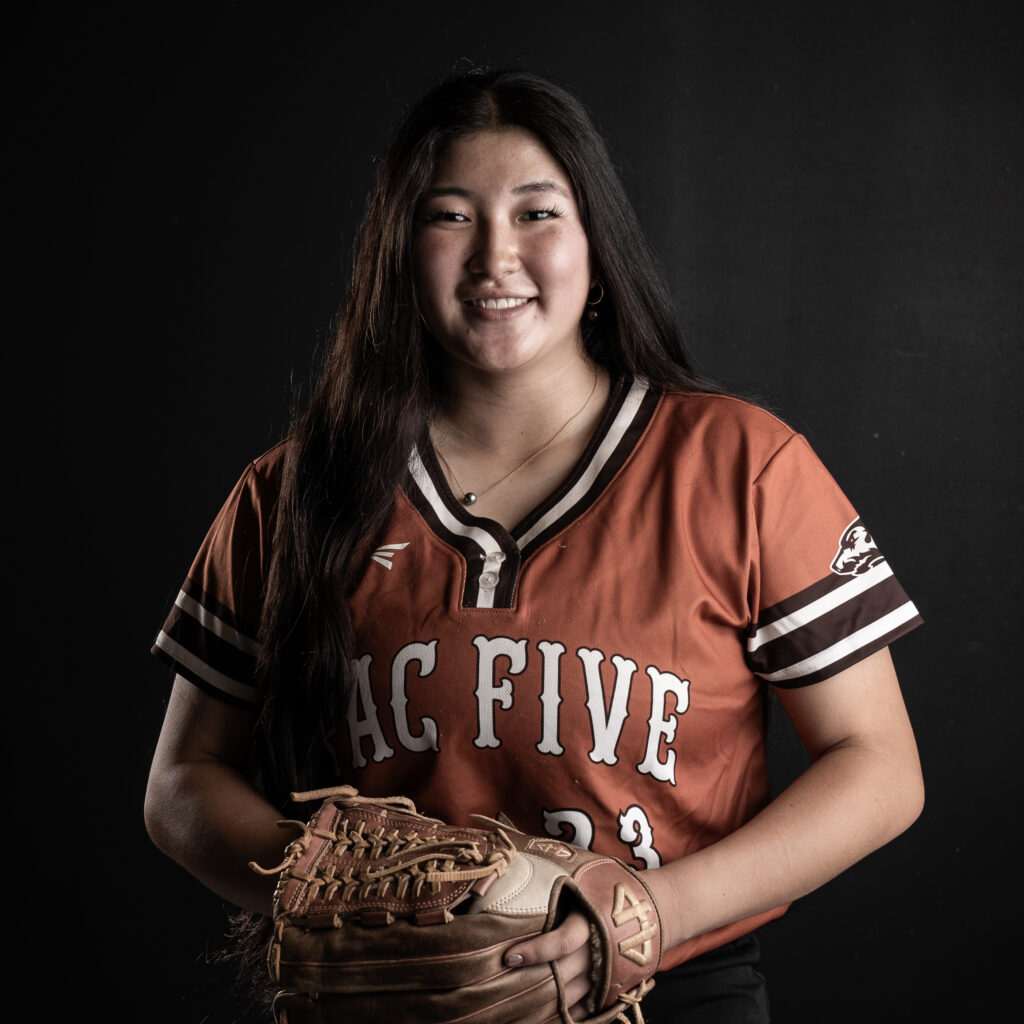
Kate Iida has attended HBA since Kindergarden and will be continuing her academic and athletic career at the Pacific Lutheran University to play softball and major in nursing. “I give the thanks to God and my parents for everything I’m blessed with and I hope to make them proud,” she said.
“No Blood, No Tears” by Liana Wong (’26)
As I held my broken music box with tears in my eyes, I looked up to watch my dad looking down on me. With a deep, serious voice, my dad said, “No blood, no tears.” I swallowed back my tears, not allowing a single one to roll down my face. I might have looked fine on the outside, but on the inside, I was hurting. I didn’t throw it away. I wasn’t ready to let it go. Unaware of how this moment would come back to me months later, I went on with life, still holding onto the broken pieces of the music box.
Although I may have reacted emotionally in this situation, something like this was not my reaction for a different situation. While running with my dad, my foot hitting the unstable pavement, I lost my balance and landed on my side. Blood dripping down my leg, I slowly walked over to my dad. “That’s going to be a good scar, and I’m surprised you’re not crying,” my dad said with a smile from ear to ear. “You’re pretty tough,” he said as he looked at the throbbing gash on the side of my thigh. I questioned why I would cry over my broken music box but not cry when I shed blood. The words “no blood, no tears” repeated in my head. Eventually, my scar healed. It didn’t hurt anymore. I didn’t even remember what the pain felt like, but interestingly enough, I still felt the pain of the music box. The pain comes back every time I see the broken pieces I couldn’t let go. This was the moment I began to realize that emotional pain can cut deeper than any physical cut. After that realization, my mindset changed. Shaping how I perceive the world, that lesson stayed with me and helped me have a better understanding of where I fit in the world.
When I was younger, I dreamed of becoming a doctor, thinking that it would make my parents proud. I wanted to be able to help people. I realized that the world we live in consists of many different worlds, a world we can’t see and a world we can. There’s a physical and a mental world. Physicians help people with the world we can see, whether it’s sickness, disease, or even broken bones. Therapists and psychologists help people with the world we can’t see. In contrast to the world we can see, the world we can’t see can leave lasting effects on us because what is blind to the eye is hardest to heal. It’s hard to address something you can’t see.
Although at first I wanted to pursue being a doctor, I now want to be a therapist. I aspire to be able to reach out to the people who are hurting on the inside, especially those who may not even realize the brokenness they carry within themselves because I know I have my own as well. I understand that a broken music box is nothing compared to abandonment, abuse, or trauma, but that’s why I want people to talk about the pains they carry. No matter the size, I want them to acknowledge their struggles in order to heal and cultivate themselves. That’s why I want to be a therapist. Providing support and guidance, I hope to help people recognize the invisible wounds they may have in order to heal. Just like how I couldn’t let go of my music box but instead found a way to cultivate myself from it, I want to help others learn from their own losses and find a source of strength. I also aim to show people that feelings are natural and make us human, so it’s okay to cry. We don’t need blood to justify our tears. Tears by themselves are just as real.
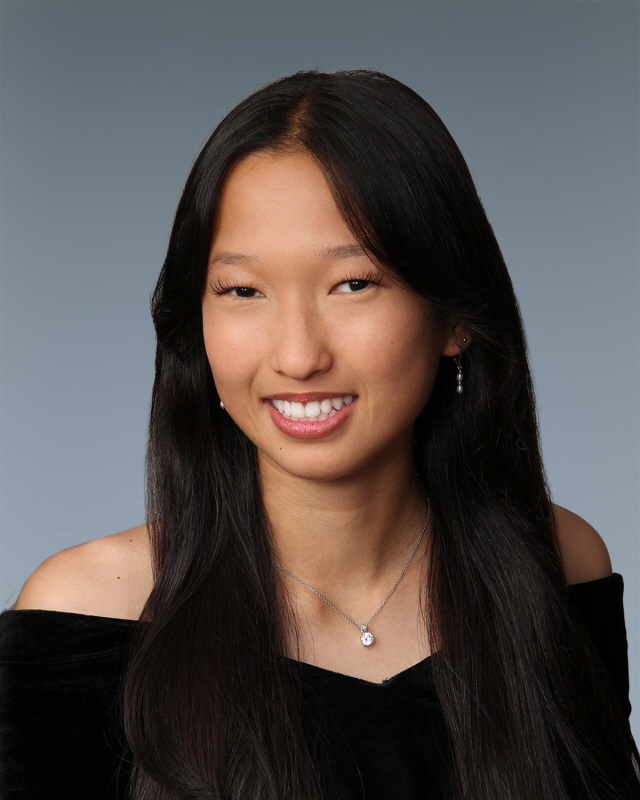
Liana Wong plans to attend University of Puget Sound and major in Psychology.
“The Musician’s Dilemma” by Jason Okutani (’26)
Awestruck with my mouth stretched to the floor, I couldn’t believe Simon’s insensitive remark. Neither could our friends. Simon constantly spread false rumors among people we were closest to. I was furious, yet I could not respond. Frozen in my pain, I kept quiet.
Facing emotions and confrontation have always been difficult. Even writing this essay takes a toll on me. As a musician, I saw music as a way to express myself, and I actually believed I was doing so. In reality, I was holding back, afraid to show people who I truly was.
Music always was an innate gift. Music was the barrier keeping me from unleashing my emotions. When practicing, everything had to be perfect, as I imagined the audience in front of me. Because of this perfectionism, I naturally excelled on my instrument, the flute. After a semester of hard work in my youth symphony (Hawaii Youth Symphony), the opportunity to conduct the orchestra arose. I gladly took it. My directors were smiling from ear to ear, congratulating me after the concert. With certainty, I planned to dive into music performance, thinking my life was all laid out and nothing would go wrong. Each solo and performance on stage with orchestras and bands were always big hits. However, I felt something was missing. I was still discontent with perfect performances that were supposed to be fulfilling. I was missing that joy I could see in professional soloists like Jasmine Choi and Ray Chen.
Though I claimed to use music as a way of communicating and expressing my feelings, I constantly struggled with being truly transparent in my performances. It was like I had to live two lives. One was the perfect performer that seemed like he had everything all together. And the other was a broken, struggling high schooler with no idea what he wanted. This was the inner child that “performed” and masked his feelings when faced with problems.
Eventually, I had to choose between my public image and my authentic self. Do I really want to give the audience a glimpse of my darkest emotions, or do I keep them separate? Each choice comes with a price, and this was my dilemma. Every night, I struggled with intrusive thoughts, insomnia and feeling like nobody truly understood the hurt behind the performer’s mask. During the day, I had it all, yet at night, I felt like a nobody.
Then one night, a revelation happened. After a recital, a musician friend said, “I loved your interpretation of the ‘Faure, Fantasie.’ It sounded better than some professional performances I have heard.” She had given me the biggest yet kindest slap in the face that awakened me. For some context, she and I talked about mental health and our feelings weeks prior. We became close because we were honest with each other. She ranted about work and I about school. She always seemed to have the right things to say. Unknown to me, each talk slowly helped bridge the gap between my public image and my hidden emotions. In turn, the talks also helped bridge the gap between my emotions and my music. My performance was nowhere near perfect, but her compliment felt sincere, and I accepted it. Did I find the joy I was looking for my whole musical life?
That night, I learned I was never honest with myself whenever I performed, or at all. I learned that music means nothing without the marriage between emotions and skill. People watch concerts and recitals to hear performers and their musical interpretations, empathizing with them during the good, bad and ugly. We mistakenly think transparency comes after we understand and accept ourselves, but in fact it’s the opposite. To understand and accept ourselves, we must dare to embrace transparency. Transparency comes before confidence, growth and wholeness.
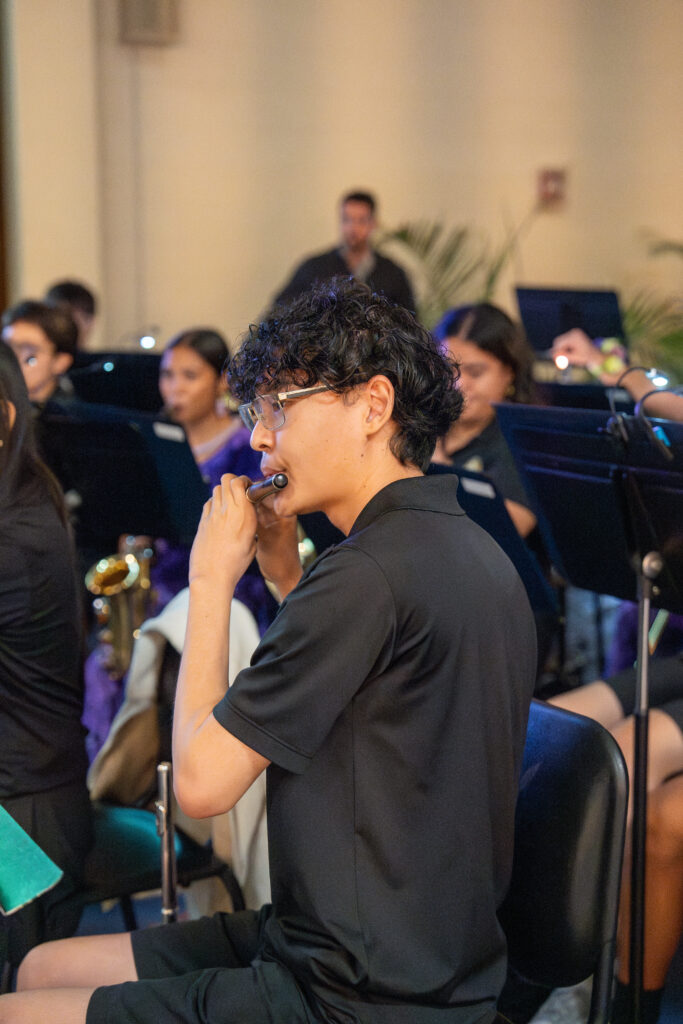
Jason Okutani plans to attend the University of Nevada, Las Vegas, and major in Music Performance. Throughout his time in high school, he has been a part of the Hawaii Youth Symphony and the Honolulu Wind Ensemble. Jason has also been given many opportunities with the Hawaii Symphony Orchestra, and has also been a student conductor.