On the last day of the third quarter, the HBA’s sophomores went on a field trip to Pearl Harbor to learn about the importance of Oahu’s part in World War II. Divided into two groups, the sophomores split up to visit the Pearl Harbor Aviation Museum and the U.S.S. Arizona. Then, altogether, they went aboard the U.S.S. Missouri for special ceremony to honor family members who serve or served with the U.S. military.
At Pearl Harbor, students got to stand at the location of the December 7 bombing. On that date in 1941, the Japan unleashed a surprise attack on U.S. military forces stationed in Hawaii. Soon after the attack the U.S. would formally declare war on Japan.
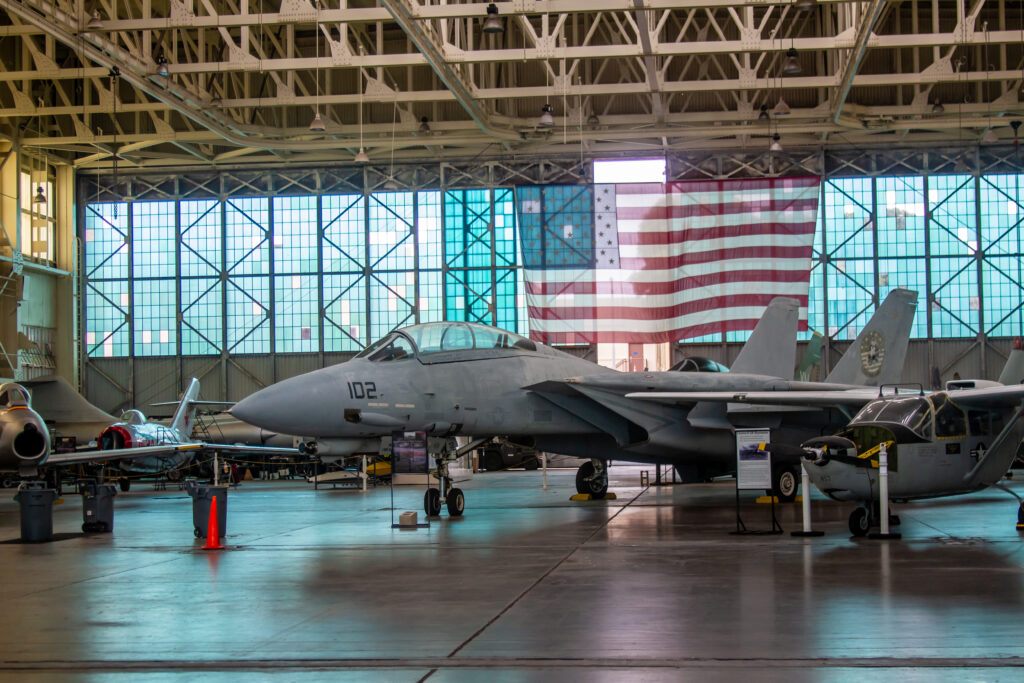
The group that went to the Aviation Museum began their time there by watching a documentary on World War II. Students learned from the film that radar had detected the Japanese planes before their arrival but the warning was dismissed. They also learned that Pearl Harbor was not the only site that was attacked by the Japanese bombers; airfields in other locations in Hawaii were also bombed. One of the first bombs to be dropped targeted the PBY water planes—planes that can land on water—in order to limit the Americans’ ability to strike back. The documentary also featured interviews of survivors that recalled how they were surprised by the early Sunday morning attack.
After the documentary, the group was led through the museum by docents who explained the significance of the planes on display, including the P-40 Warhawk used especially in China, the feared Japanese zero fighter, and the B-17 bomber. The docents also shared that the museum not only displays World War II-era planes but also post-war planes, depicting the advancement of U.S. military aviation.
Photograph by Ava Quinlan (’28)
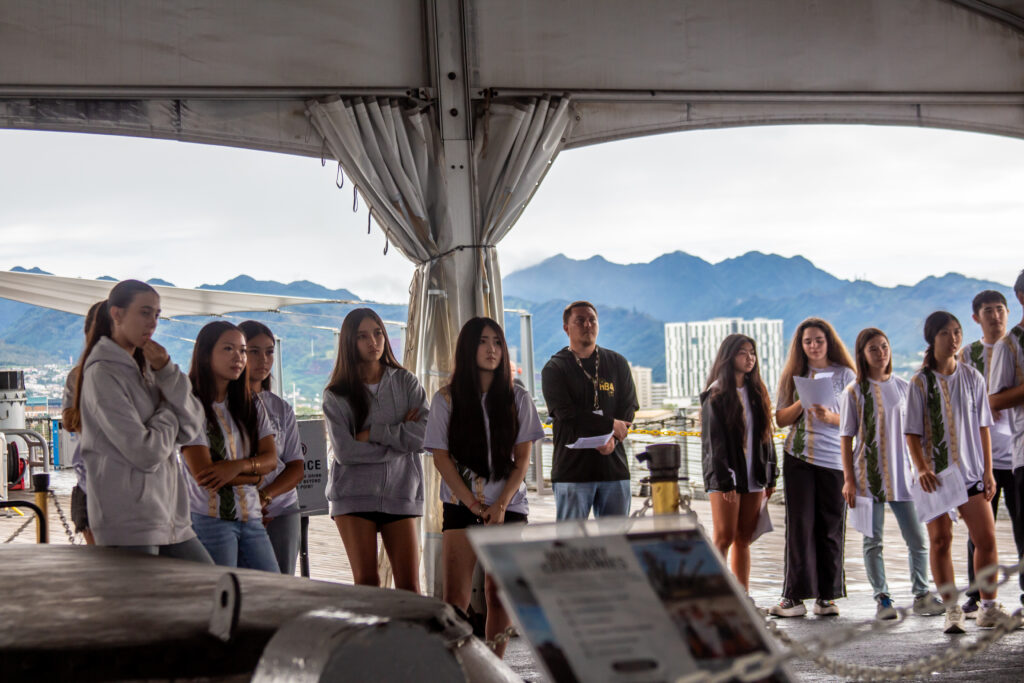
The field trip culminated aboard the world-famous Iowa class battleship, the U.S.S. Missouri. All the sophomores got to see the ship’s massive 16-inch guns and the plaque aboard the ship that marks the spot where the treaty that ended World War II was signed. The students also gathered for a special ceremony to honor the military veterans in their families. A handful of students spoke about the service of their family members not just in World War II but also other wars. A key moment in the ceremony was the telling of the story of Jacob Deshazer and Mitsuo Fuchida. Fuchida was a Japanese commander who led the first wave of aircraft that attacked Pearl Harbor. Deshazer was a pilot in the Doolittle raid where the U.S. struck back against Japan by bombing the Japanese archipelago. Deshazer was shot down and captured by the Japanese as a prisoner-of-war. After his release at the end of the war, he vowed to return to Japan to preach the gospel. Years later, in Japan, he encountered Fuchida, who converted to Christianity and became friends with Desharzer.
Lynne Nakano, U.S. History teacher and Social Studies Department Chair, has led many sophomores to Pearl Harbor many times. She believes it is a critical component of their learning. “One of the reasons I do it is because I got into History and got to visit sites in Europe in eighth grade. Since we live in the middle of World War II history, I want [students] to see it when [they] are learning about it.” Although Nakano has gone on this field trip numerous times, she says she never tires of it. “It’s a lot of work but it’s not boring to me. It’s really an honor that, for example, I remember doing this field trip in many different ways. Every year, it’s a little different. What works out is that it’s always a miracle when all the things work out. They allow us to do the ceremony on board, [which is] a really special thing and it’s different every year because it’s different students [making a] tribute together. I love the story of Fuchida and Deshazer. So I was happy when I found that and we added that to the field trip,” she explained.
Nakano hopes the field trip will help students acknowledge the sacrifice of others and learn about the past. “Students should know that [their] classmates have family members that have served to give us freedom. I hope we feel the power of lives well lived with greater courage, honor. And of course I hope that we get more interested in history by doing on-location learning,” she said.