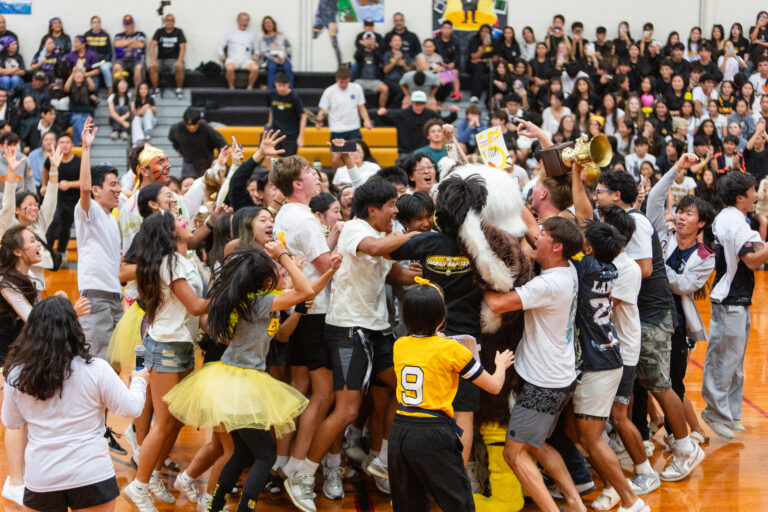
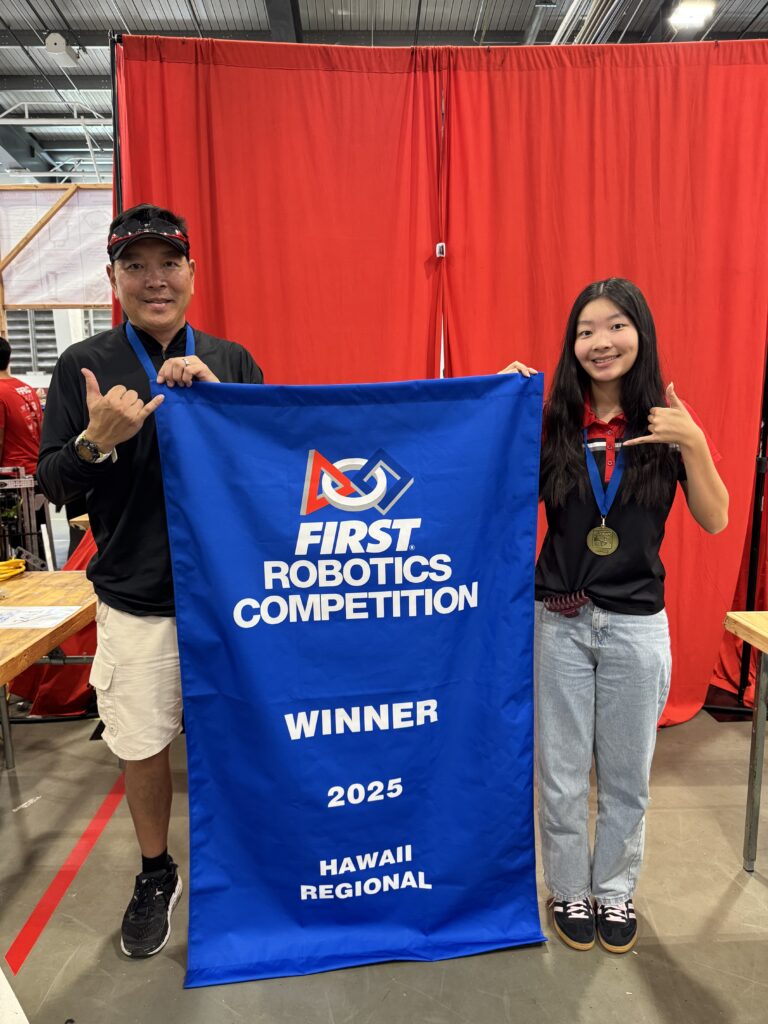
My dad, Mr. Glenn Lee, is the founder of Team 359: The Hawaiian Kids, a competitive robotics team based in Waialua High and Intermediate School. Over the years, he has built up a legacy in the robotics community as the founder of one of the most decorated and successful teams in the world. While I attend HBA, I’ve been participating in Team 359 for more than three years, alongside a group of 30 students from across school districts. I am the lead of the Business, Media, and Documentation sub-team as well as a co-captain of the team. Our team has the third most blue banners (competition and program award wins) in FIRST Robotics Competition (FRC) history and my dad oversaw the team’s induction into the FIRST Hall of Fame back in 2011. In these past few years of being on the team, I got a close look at my father’s achievements as a mentor and leader, helping to raise the next generation of STEAM (Science, Technology, Engineering, Arts, and Mathematics) leaders.
HOW IT ALL STARTED
When he was a college student pursuing a degree in electrical engineering and later a Master’s degree in business, my dad would teach math at public schools during the summer to help pay for his college tuition. After graduating, there weren’t many electrical engineering jobs out there, but the opportunity to teach at Waialua High and Intermediate School and fulfill his passion for STEM came about, so he took the job. “I took that job teaching math and science thinking that I was just going to do it for a few years until I could figure out what I wanted to do or eventually get an engineering job. Well, 32 years later, I’m still at Waialua High and Intermediate School, and I have no regrets,” he said.
After a team from California did a robot demonstration and introduced FRC in Hawai’i, my dad was intrigued. He recalled, “It looked amazing, and I thought it would be a fun opportunity for our students. Being an engineering major, I was interested in science, technology, engineering, and math. Before STEM even became a buzzword, robotics already offered these kinds of opportunities, and I knew that if we participated, we would get a chance to have our students exposed to all these different subject areas, careers, being able to problem-solve, participate in a competition, and so on.”
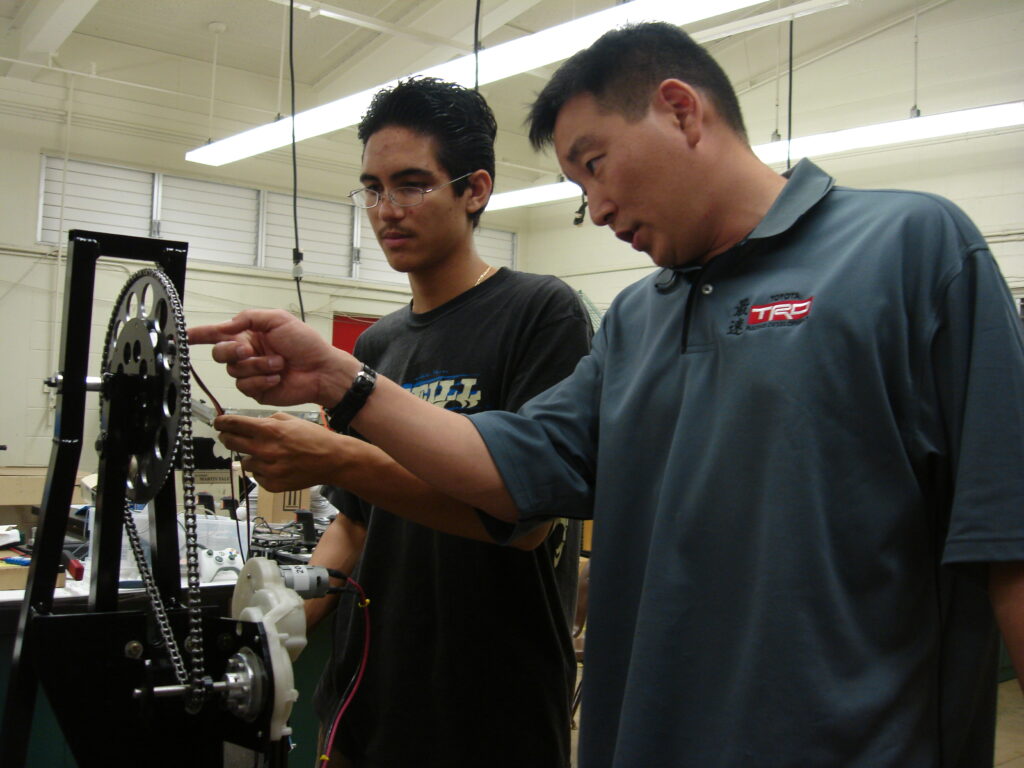
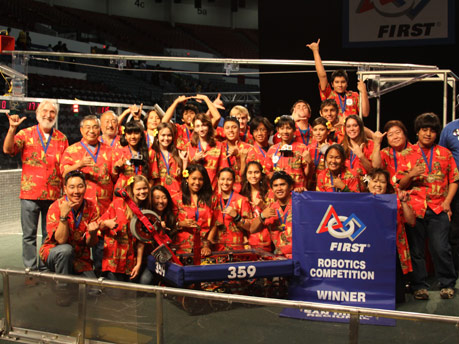
In 1999, my dad jumped at the opportunity to help form Hawai’i’s first FRC program. He remembers clearly what that first year was like and how it felt to be a rookie team. He said, “We did not know what we were doing. Going to San Jose to compete in our first competition with more experienced teams was very intimidating. We had a little bit of imposter syndrome where we felt like we didn’t belong. We were very nervous. I can honestly say that we were trying really hard to be very confident going to the event, but when we got there on the first day, it was everything but that; but we stuck with it.” On the third day, their robot didn’t perform as well as they had hoped. Luckily for them, because FRC requires teams to form three-team alliances, 359 was chosen by one of the top teams to help round out their alliance. As a result, my dad’s team ended up as finalists at that tournament. My dad recalls that moment as an experience he’ll never forget. “It was the most exciting thing I think I ever did in STEM ever. We were very emotional and in tears. People used to always ask me, ‘What do you get for winning a competition? Do you win money?’ It wasn’t that. We won in the sense of experiencing success, and that gave us hope. If we had gotten a terrible result at that event, we may not have continued our program,” he said. FRC was and still is very expensive. At the time, the team was struggling financially and didn’t have a lot of resources. They needed something to give them the motivation to keep going. “I mean, it was still a lot of work to raise money, but we had hoped that it would all be worth it if we could keep getting better,” he said.
FACING SETBACKS & LEARNING FROM THEM
However, their early successes were hit with a huge setback. “2006 was our hardest year ever,” he said. That year, the team lost all of their construction mentors and teachers from the administrative and logistics side. They all retired, moved schools, or no longer wanted to volunteer their time. “I remember during that year, realizing just how much we had lost and that we had no one to really kind of pick up those roles, so it was a tough year for us,” he said. My dad then realized that he needed to have a better plan for fundraising, recruiting, and retaining mentors, and finding a facility for their program. He remembers reaching out to alumni, engineers, and others in the community to help the program. “Although it was very difficult for us to start up again, because we had an intentional plan to build that up, after several years, we were able to become even better than we were prior to losing our past mentors,” he explained.
In the years since 2006, Team 359 has gained a reputation for being a successful in fundraising. This change did not come easy, especially since the team is based in rural Waialua. My dad remembers doing what most clubs and organizations do: They went out and fundraised through car washes, Zippy’s Chili tickets, and other small-scale initiatives to make a profit. In the second and third year of the program, they qualified for the World Championship, but never got the chance to go because they couldn’t raise enough money in a short period of time. Things took a turn for the better in their fourth year. Castle and Cooke, a large real-estate company in Hawai’i, learned about how Team 359 missed the World Championship because of a lack of funds. (Team 359’s plight was covered in a local newspaper.) They company reached out to Team 359 and helped them by selling a lot of chili tickets. This effort managed to raise $10,000, which sent the whole team to the World Championship for the first time. My dad remembers the experience as being surreal and unlike any regional competition they had experienced before. However, raising all of that money through selling small-scale tickets was exhausting for the parents, students, and school. My dad knew that this was not a long-term solution and decided to turn to grant writing. After he started writing to businesses, local foundations, and STEM grants from the Department of Education, he began to learn a lot about the process. “A lot of that funding we found couldn’t be used for travel expenses, but it did help us pay for our registration fee, parts for our robot, and other materials that we needed. Whatever other money we raised on our own could just be focused solely on travel and our grants could pay for all the other parts of our program,” he said. This fundraising method worked for almost another decade, but eventually, the growing program needed more space. My dad started applying to bigger foundations and title grants to raise enough capital to meet those goals. Today, the program is housed in two buildings, totaling over 12,500 square feet. We also have a permanent practice field space in the cafeteria for our robot, thanks to these funding sources.
BUILDING A SUSTAINABLE PROGRAM
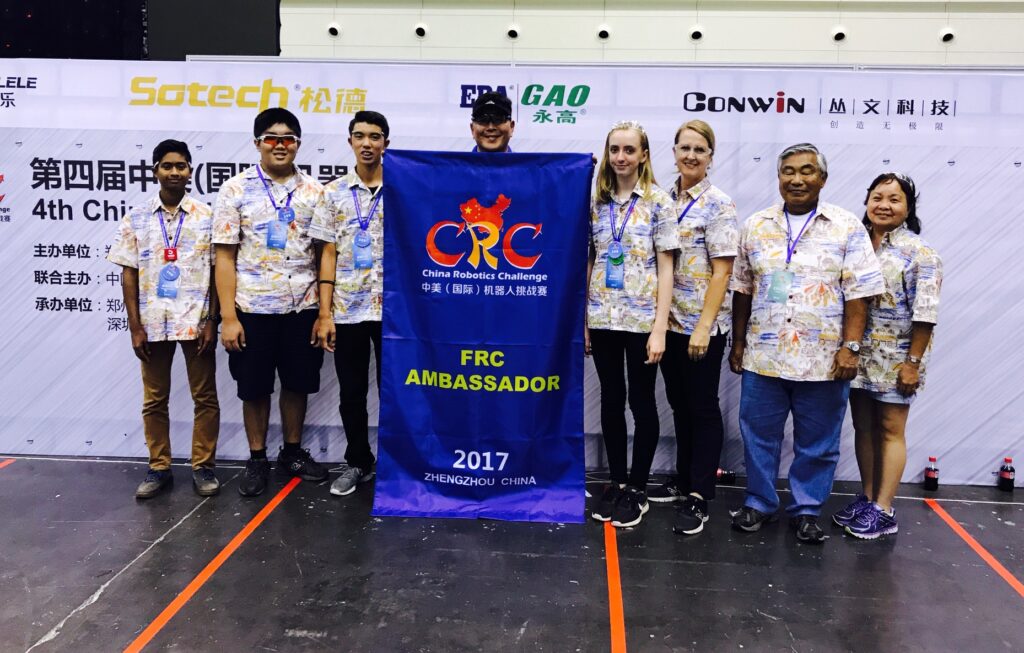
Recently, my dad has found a new method for helping students fund travel. Through the Department of Education Workforce Development program, students can work as interns in the program and get paid up to $20 an hour and $10,000 per year if they’re 16 and above. Because most of our competitions are in different countries and all over the continental United States, we travel frequently, which can become a financial burden for many families. (I travel with my dad for more than 30 days a year for robotics competitions.) The Workforce Development program not only helps alleviate families’ financial burdens but also reduces the stress that comes from having to fundraise.
My dad never imagined that his program would be around for more than 27 years. His advice to other FRC teams is this: There are three ingredients to building a successful FRC program – a dedicated workspace, a sustainability plan, and mentors. He added, “It doesn’t matter the size of your school, the demographics, or how smart your students and mentors are; leverage what you have to make the most out of it and create a culture with a never-give up attitude.”
BEYOND ROBOTICS
“What keeps our program going, what keeps me going, is the fact that we always have something to look forward to. I think as long as you set new goals and you have dreams, with achievable objectives and things that you want to do, then I see no reason why you would ever want to stop, and so the 27 years could easily be a whole lot more.” – Glenn Lee
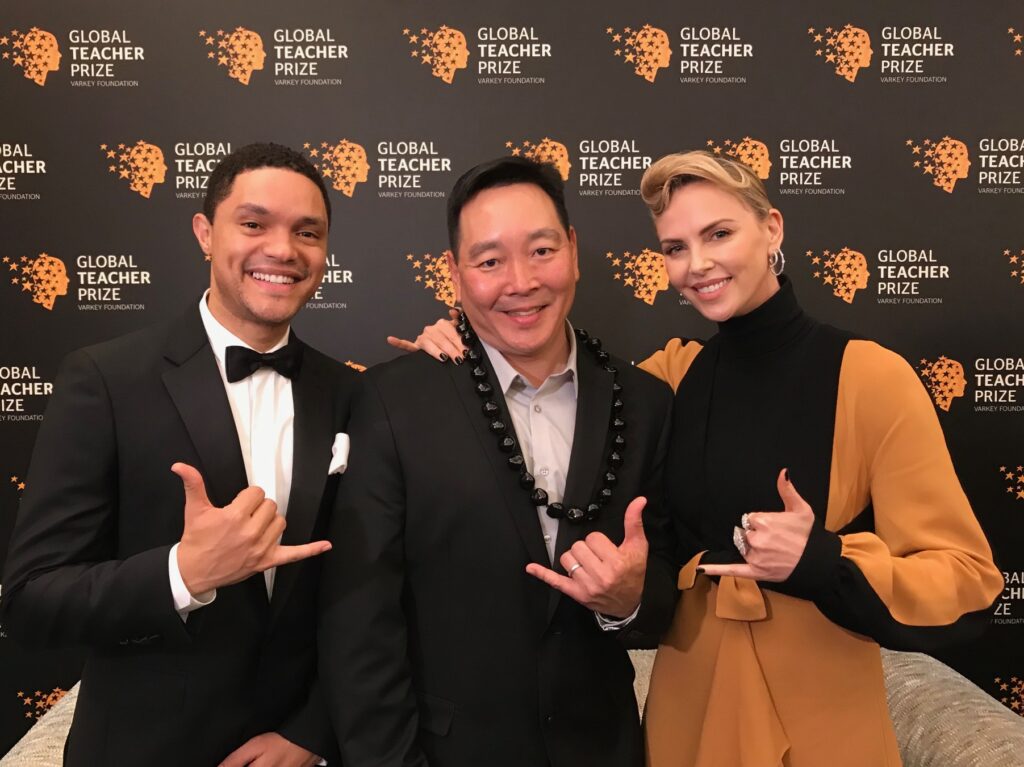
My dad is not only a coach and mentor on the field but also plays integral roles off the field. He is a STEM Learning Center Director, in charge of writing federal and state grants, not just for robotics, but for the entire Central North Complex District l. He’s also responsible for coordinating middle school sports and enrichment activities such as Band and Culinary, and other activities that happen after school. He is the head of the Career Technical Education (CTE) Department, responsible for supporting a number of programs of study at Waialua High, such as the Engineering Technology, Advanced Manufacturing, Building and Construction, Culinary, Graphics Technology, Digital Creative Media, and Agriculture Career Pathways.
Even after all of these years, my dad’s passion hasn’t waned, and he hasn’t lost that same spark that got him excited back in 1999. He said, “I feel like I could do FRC forever. Although the program has been in existence for 27 years and we’ve built it and we have the same team identity, the one thing that changes year-to-year is the makeup of our team and our goals. We have some new mentors, we have new students, we have new places that we want to go, new teams to meet and collaborate with, and so many new ideas and projects that we want to do. What keeps our program going, what keeps me going, is the fact that we always have something to look forward to. I think as long as you set new goals and you have dreams, with achievable objectives and things that you want to do, then I see no reason why you would ever want to stop, and so the 27 years could easily be a whole lot more.”
I admire my dad for not losing sight of why he continues his work in robotics. More important than any award is his desire to see his students grow through the program. ”The biggest thing that I care about is that every student in our program sets big goals and dreams. I want them to be more successful, to want to go to college, to want to go to trade school, to ultimately take what they have learned and apply it to the next phases of their life and career goal aspirations,” he explained.
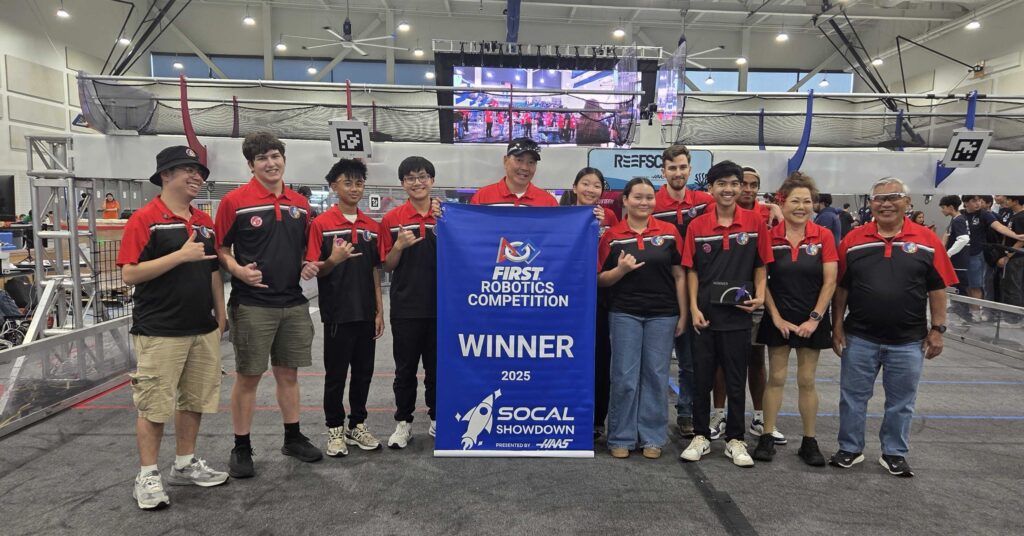
Recently, Team 359 competed in three off-season competitions: SoCal Showdown, Tidal Tumble, and Beach Blitz in California. We ended up winning SoCal Showdown and were finalists at Tidal Tumble and Beach Blitz. My dad credits a lot of these successes to new additions to our program. “One thing that we were able to do this year was have a student and a couple of remote mentors from the state of Washington, who work remotely with our team to help us succeed,” he said. As we prepare for the upcoming season, he feels really excited about this new opportunity, as two more students from Washington and California are joining as remote students. In March, we plan to travel to Canada, Idaho, and Utah to compete for a spot in the World Championships in Houston, Texas, which we have qualified for in the last 19 years.
CLOSING MY OWN CHAPTER
As I look ahead to my senior year, I realize that my time on the team as a student is nearing its end. When I first started, my dad told me that he wanted me to join the program because of the opportunities it provided and the positive experiences I could gain. I have traveled around the world, making lifelong friends along the way. I never really thought the arts were my strong suits, but I have gained skills in graphic design and photography, designing team magazines and editing videos, which say otherwise. Most importantly, I’ve learned to step up as a leader so that my teammates can rely on me for both moral and foundational support. This program is something special, and it has changed my life for the better. I have bigger ambitions and want to go to college on the mainland U.S. to experience new things because I’ve learned that I’m capable of it. I’m just one of many students shaped by my dad’s program. He has shown that even though our team comes from humble roots, we can still be just as competitive and impactful as any other school through hard work and determination. When we go to competitions, travel to different countries, or meet new people, I am proud to say my dad is Glenn Lee, the head mentor of Team 359.